
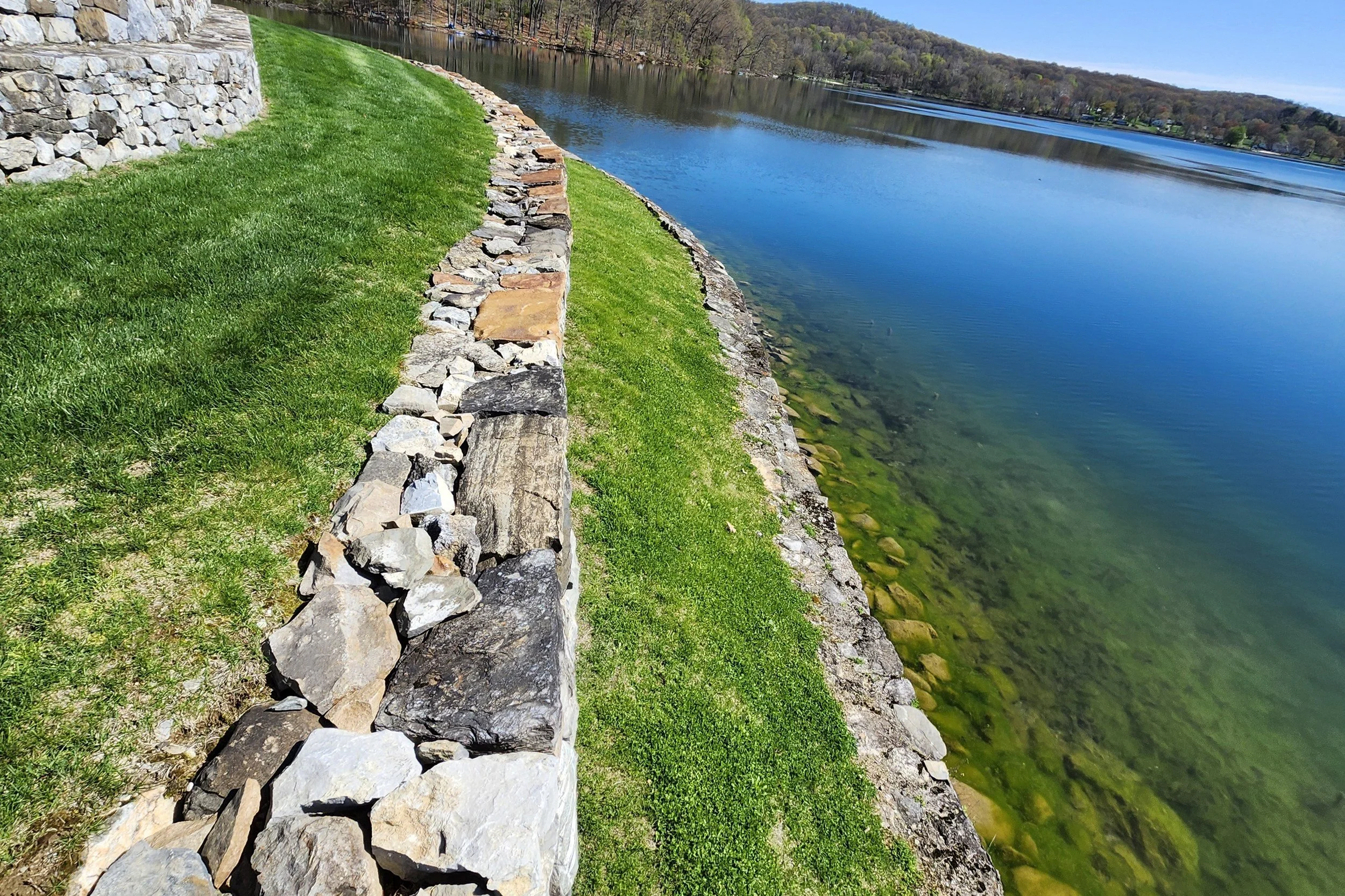
Every project that changes the shape of a slope begins underground, which is why retaining wall installation in Wappingers Falls, NY gets settled months before anyone sees a finished face of stone. A wall is the first thing built on a graded lot and the last thing most homeowners picture.
Alan Lehigh founded Lehigh Lawns & Landscaping in 1987, and our team holds Certified SRW Installer and ICPI credentials for retaining wall and patio work. That background shapes how we sequence a build: the wall comes first because a terrace, a walkway or a planting bed sits on the grade it holds.
Its height, drainage and base get fixed before anything above it can be drawn. A homeowner who settles the wall in December has the groundwork scheduled while the design calendar is still open.
One who calls in April watches the wall slide into summer and the patio behind it into autumn.
Related: French Drain Installation in Wappingers Falls, NY: Why the Work Belongs in Fall
Why Does a Retaining Wall Have to Be Designed Before the Patio?
A retaining wall has to be designed before the patio because the patio sits on the fill the wall retains.
The finished height of a terrace, the depth of its base and the route water takes leaving it are all set by the structure holding that fill in place.
Drawing the surface first and the wall second usually means drawing the surface twice. On a sloped Hudson Valley lot the wall is the structural decision, and everything above it is the finish.
What Does a Hudson Valley Winter Do to a Retaining Wall?
A Hudson Valley winter pushes on a retaining wall through repeated freezing and thawing of the water held behind it.
Soil here freezes and thaws many times between December and March, and trapped water expands each time it turns to ice.
That pressure, more than the weight of the soil itself, is what pushes a wall out of plumb. The answer is drainage: clean stone behind the face, filter fabric separating that stone layer from the native soil, and an outlet that moves water off the structure instead of storing it.
Related: Retaining Wall Installation in Wappingers Falls, NY: Building a Wall That Stands the Test of Time
What Decides the Material a Retaining Wall Uses?
Height, the load behind the wall and the character of the house decide the material a retaining wall uses. Masonry block carries engineered load predictably and suits taller runs and tiered work.
Natural stone reads softer against an older property and sits well at seat height, so some sites pair a block retaining wall with a stone seating wall.
Our showroom in Wappingers Falls lets homeowners see materials in person rather than choosing off a screen.
When Does a Retaining Wall Need an Engineer Involved?
A retaining wall needs an engineer once it carries real height or holds a slope above a driveway, a structure or a second wall. At that point the work stops being a matter of setting units and becomes a question of soil load and reinforcement.
That question is worth raising during the site visit rather than after the excavation is open. Local permitting varies by town across Dutchess County, so it belongs in the same early conversation.
What Happens on Site Before Any Retaining Wall Stone Arrives?
Excavation, base and drainage happen on site before any retaining wall stone arrives. The trench is cut below finished grade, compacted stone goes in and gets compacted again, and the drainage layer and its outlet are set behind the first course.
That work is most of the labor and none of the photograph. It is also the part that decides how the wall looks in its fifteenth winter.
Settle the Grade Before the Spring Queue Fills
Winter is when next season’s projects get drawn, and when the grading, drainage and base work claim their place in the build calendar.
If a slope on your Wappingers Falls, NY property is changing next year, the wall is the piece worth settling now rather than in April.
Lehigh Lawns & Landscaping builds retaining and seating walls across Dutchess, Orange, Putnam, Ulster and Westchester counties. Schedule your retaining wall consultation with Lehigh Lawns & Landscaping.
In Summary
How long does a retaining wall take once the crew is on site?
A straightforward retaining wall at seat height typically takes a matter of days once the crew is on site. A tiered or reinforced wall on a steep Wappingers Falls lot runs considerably longer, because excavation and base work expand with height, so the schedule is driven by the groundwork rather than by the stone.
Can a retaining wall be built in phases alongside a larger landscape project?
A retaining wall can be built in phases as long as the finished grade is drawn at the start. Sleeving for lighting and irrigation, drainage outlets and the base for later sections get sized during the first phase, so a second stage ties into work already in the ground.
Does a finished retaining wall need maintenance?
A finished retaining wall needs very little maintenance on the structure itself. The item worth watching is the drainage outlet, which silts up or disappears under mulch over a few seasons, and keeping it clear keeps water leaving the wall instead of collecting behind the face.
Who installs retaining walls for Lehigh Lawns & Landscaping?
Lehigh Lawns & Landscaping retaining walls are built by our own team, which holds Certified SRW Installer and ICPI credentials. The company has been building landscapes in the Hudson Valley since Alan Lehigh founded it in 1987.