
Lawn Fertilization in Wappingers Falls, NY: Why It Sits on a Schedule
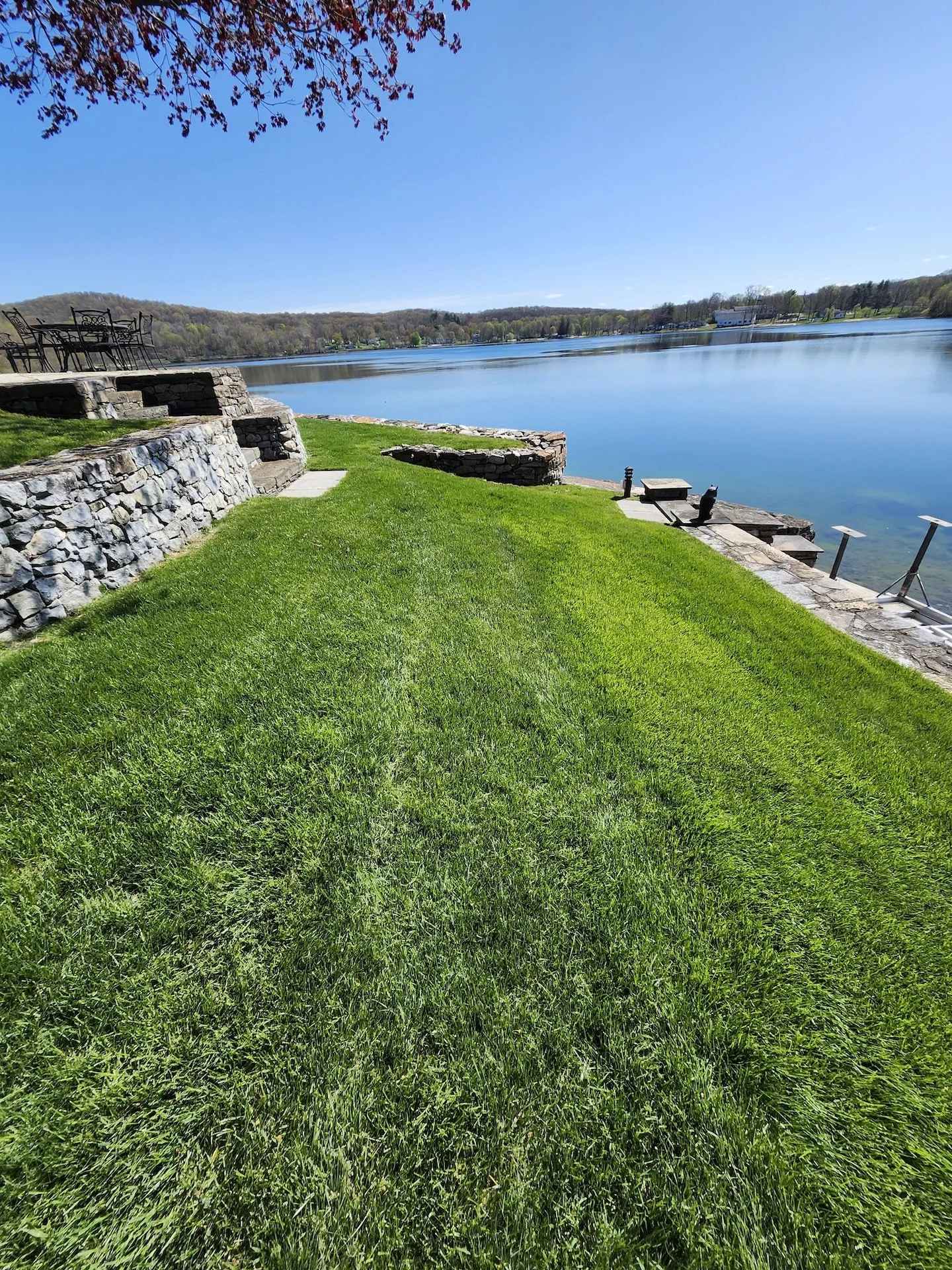
Homeowners searching for lawn control in Wappingers Falls, NY are usually looking at damage that has already happened. That is the hard version of the problem. The insects that damage Hudson Valley turf are vulnerable for a few weeks and destructive for the rest of the summer.
Lehigh Lawns & Landscaping has cared for Hudson Valley lawns for nearly forty years, and grub control sits inside our six-step fertilization program rather than being sold as an emergency call.
A treatment landing inside the vulnerable window does a great deal. The same treatment in September does much less, because the feeding is finished and what is left is a recovery job.
Related: How a Lawn Care Service Company in the Hudson Valley Should Approach Every Property
Why Is Insect Control Applied Before the Damage Shows?
Insect control goes down before the damage shows because the visible damage and the vulnerable stage do not happen at the same time. Beetle larvae hatch and begin feeding on roots while the grass above still looks fine.
Treating on the calendar rather than on the symptom means the material meets the insect at the stage where it works, which is why the step has a fixed place in the program rather than a place in the phone queue.
What Does the Grub Step Actually Do?
The grub step targets the larvae of beetles that lay eggs in turf through the summer, and it is aimed at preventing the brown patches that show up toward the end of the season.
A treated lawn in a heavy pressure year looks unremarkable, which is a difficult thing to sell and the correct result. The program places it alongside the feeding and weed steps so the property gets one schedule rather than several.
How Do Surface-Feeding Insects Differ From Grubs?
Surface feeders work above the soil rather than below it, and they show up faster. Where grubs remove roots and leave turf that lifts away, surface feeders chew the blades and crowns, so the damage reads as thinning and ragged patching rather than as dead sod.
Same lawn, different depth, different window, which is why the program treats them as distinct problems rather than one insect step.
What Can a Treatment Recover Once the Turf Is Thin?
A treatment on thin turf stops the loss. It does not put grass back. This is the distinction worth understanding before you call anyone, because an application on damaged turf can look like it did nothing when in fact it did the only thing available to it.
Filling the gap is a separate piece of work: seed, and the cool, moist conditions of early fall that let it establish.
In the Hudson Valley that window is short and it closes, so a lawn diagnosed in mid-August has options that the same lawn in October does not.
How Does Insect Work Sit Alongside the Rest of the Program?
Insect work is one part of a season rather than a standalone visit. Feeding, weed control and insect control are staged so each lands when it is useful, and the same crew sees the property enough times to notice a problem developing between rounds.
That continuity is the part that is hard to replicate with call-outs, since a technician visiting once has no idea what the lawn looked like six weeks earlier. You can see how weassess a property before any of it is scheduled
Related: Why a Lawn Treatment May be Needed Along with Routine Lawn Care in the Beacon, NY Area
Get The Insect Steps Onto The Calendar
If the lawn has thinned this summer and nobody has told you why, the useful move is a look at the property now rather than a treatment booked blind. We will walk it, work out what has been feeding and where, and set out what the rest of this season and next spring should include.
Lehigh Lawns & Landscaping runs season-long lawn programs for homeowners around Wappingers Falls and the surrounding Dutchess County communities.
In Summary
Is it worth starting a lawn program partway through the season?
Starting partway through the season is usually worthwhile, though what it can deliver depends on the date. Beginning in August means the preventative insect step has passed for this year, so the first season is about stabilizing the lawn and setting up a full schedule for spring. Fall feeding and seeding still do real work in that stretch. We tell you plainly what a late start can and cannot fix before you sign on.
Do ticks and mosquitoes come under the same program?
Ticks and mosquitoes are handled by a separate flea, tick and mosquito service rather than by the lawn program. The target, the timing and the areas treated are all different. A lawn program looks after the turf, while the nuisance-pest program looks after the parts of the property where people sit. Plenty of households run both, and we schedule them so the visits do not collide.
How soon after an application can the lawn be used?
The technician leaves specific guidance at the time of the visit and it varies with the material and the weather. Follow the note left on the property rather than a general rule, and call the office if anything on it is unclear. Pets and children are the usual reason people ask, and the guidance accounts for both. The note stays on the door whether or not anyone is home at the time.
Related: Top 4 Lawn Treatment Products for Your Lagrangeville, NY, Yard
About the Author
Alan Lehigh started mowing lawns in his Wappingers Falls, New York neighborhood and founded Lehigh Lawns & Landscaping in 1987. Nearly 40 years later, the company is still led by Alan and operates with the same principles he started with: honest pricing, clear communication, and work that holds up. The team designs, builds, and maintains residential and commercial outdoor spaces across the Hudson Valley, from landscape design and hardscaping to lawn care, irrigation, and snow removal. Every article on this blog is written to help property owners in the Hudson Valley make informed decisions about their outdoor spaces.
